5.3 Museo de Arte Moderno de Trujillo (MAM-Trujillo) / Museum of Modern Art of Trujillo (MAM - Trujillo)
Tierra de La Libertad
Un metro cuadrado de Tierra de La Libertad
o Tierra de La Libertad en un metro
cuadrado
2013
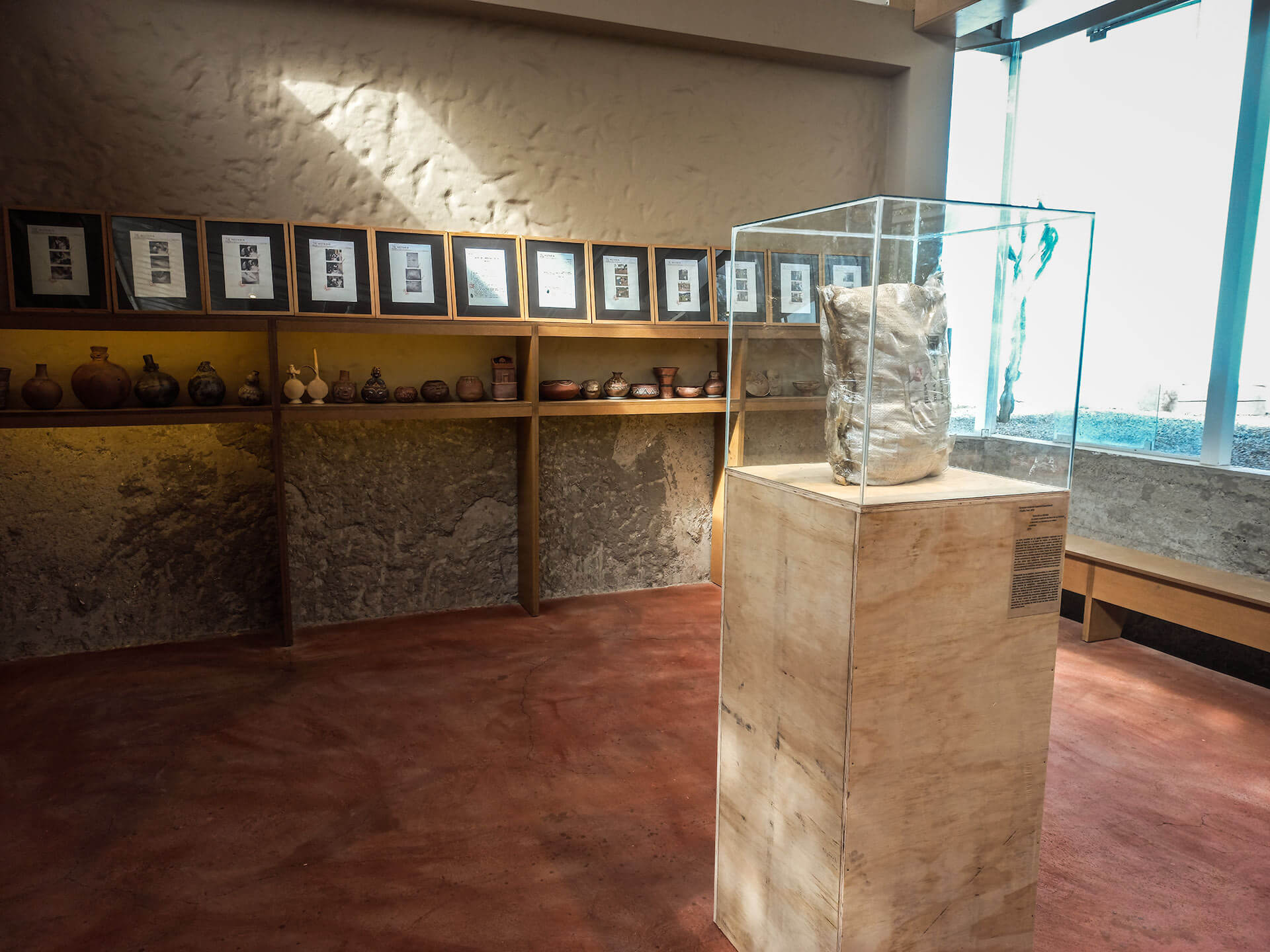
La obra consiste en un gesto simbólico realizado por el artista al regresar a su lugar de origen, La Libertad, en el norte del Perú. Con la presencia de un notario, este acto fue documentado y la tierra sellada y certificada oficialmente a nombre de la nación con el título Tierra de La Libertad.
Posteriormente, el artista trasladó este fragmento al territorio donde actualmente reside, lejos del norte, transformándolo en una pieza que condensa el desplazamiento, memoria y pertenencia. La tierra, contenida y autentificada, se convierte en una extensión simbólica del lugar natal y en un testimonio material de la distancia que separa al individuo de su origen.
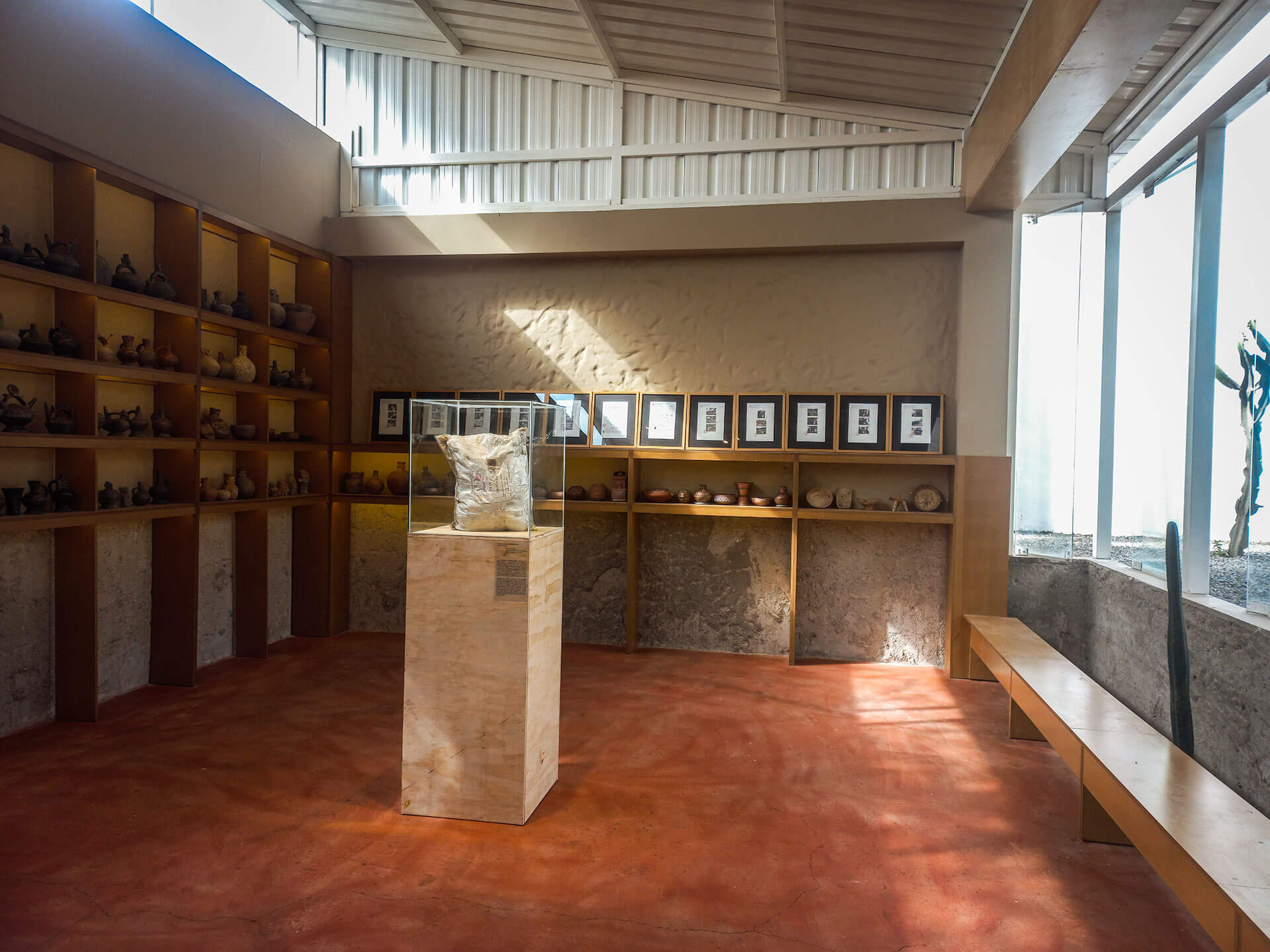
Presentada en el pabellón precolombino, la obra establece un diálogo entre los gestos contemporáneos de apropiación simbólica y las antiguas prácticas de extracción material. En este contexto, la acción de recoger tierra se vincula con una larga historia de extracción - arqueológica, económica y cultural- que ha marcado el territorio de La Libertad. Así, el fragmento sellado no solo remite a la memoria personal del artista, sino también a la memoria colectiva de un suelo continuamente removido, excavado y desplazado. La Libertad que el título evoca se vuelve paradójica: una libertad contenida en un metro cuadrado, una energía detenida que resuena con las huellas de todo lo que ha sido extraído de esta misma tierra.
Texto elaborado por el Museo de Arte Moderno de Trujillo (MAM-Trujillo) para el pie de obra, 2025.
Tierra de La Libertad
One Square Meter of Tierra de La Libertad
or Tierra de La Libertad in One Square Meter
2013
The work consists of a symbolic gesture carried out by the artist upon returning to his place of origin, La Libertad, in northern Peru. In the presence of a notary, the act was documented and the soil was sealed and officially certified in the name of the nation under the title Tierra de La Libertad.
Later, the artist transported this fragment to the territory where he currently resides, far from the north, transforming it into a piece that condenses displacement, memory, and belonging. The soil—contained and authenticated—becomes a symbolic extension of the artist’s birthplace and a material testimony to the distance that separates the individual from his origin.
Presented in the pre-Columbian pavilion, the work establishes a dialogue between contemporary gestures of symbolic appropriation and ancient practices of material extraction. In this context, the act of collecting soil is linked to a long history of extraction—archaeological, economic, and cultural—that has shaped the territory of La Libertad. In this way, the sealed fragment refers not only to the artist’s personal memory, but also to the collective memory of a land that has been continuously removed, excavated, and displaced. The “Liberty” evoked in the title becomes paradoxical: a liberty contained within a single square meter, a suspended energy that resonates with the traces of everything that has been taken from this same land.
Text prepared by the Museo de Arte Moderno de Trujillo (MAM-Trujillo) for the artwork label, 2025.
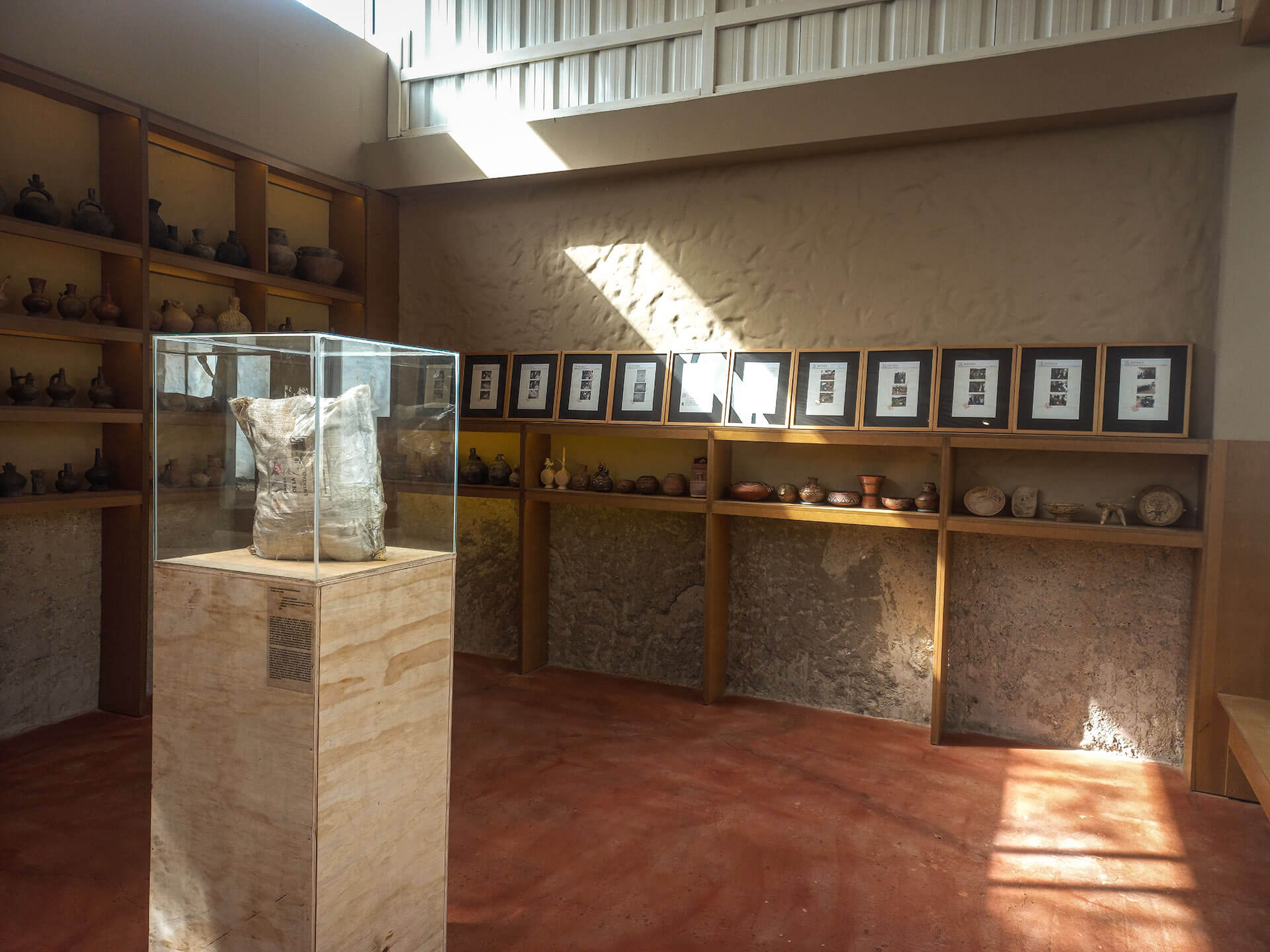
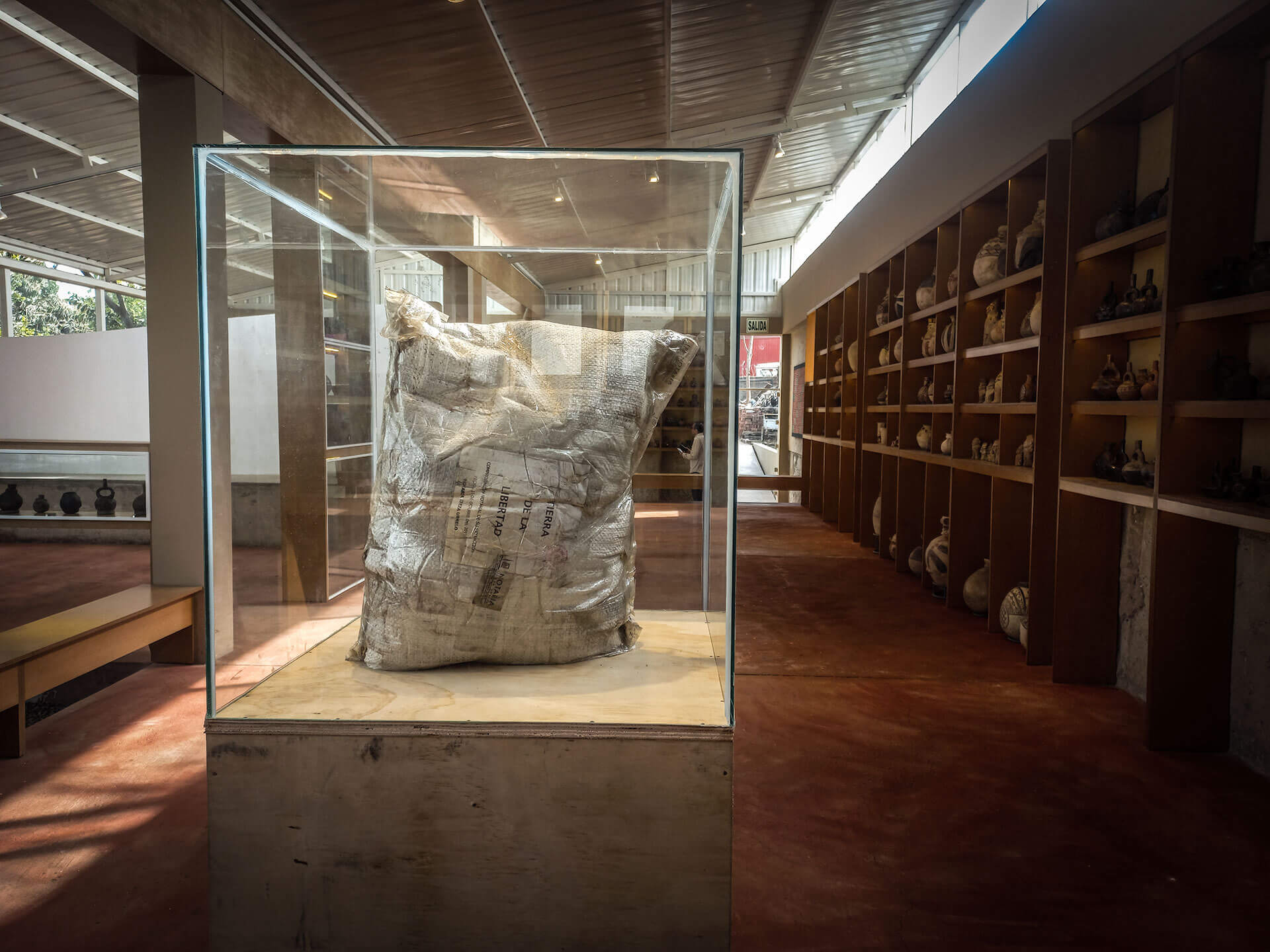
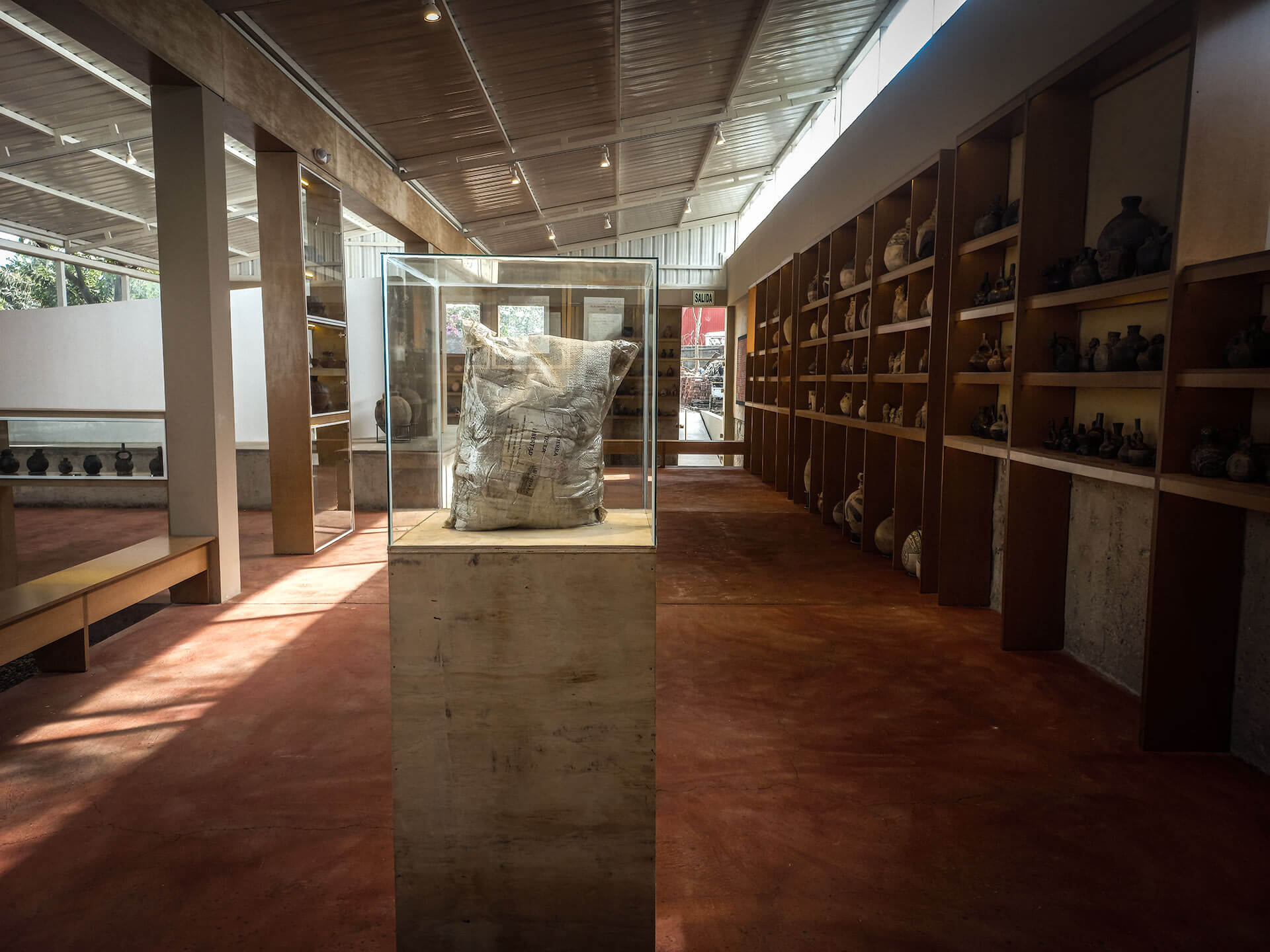
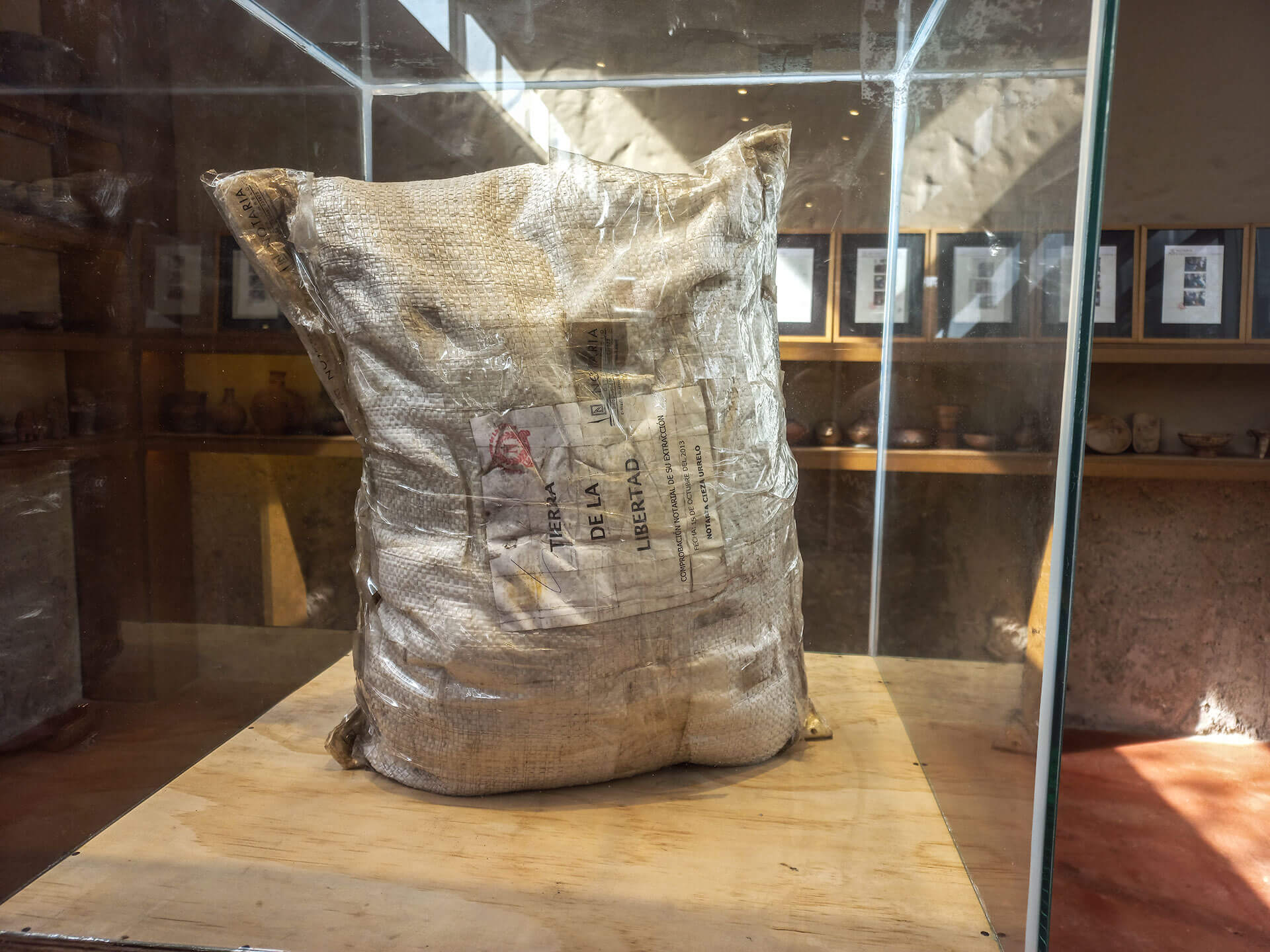
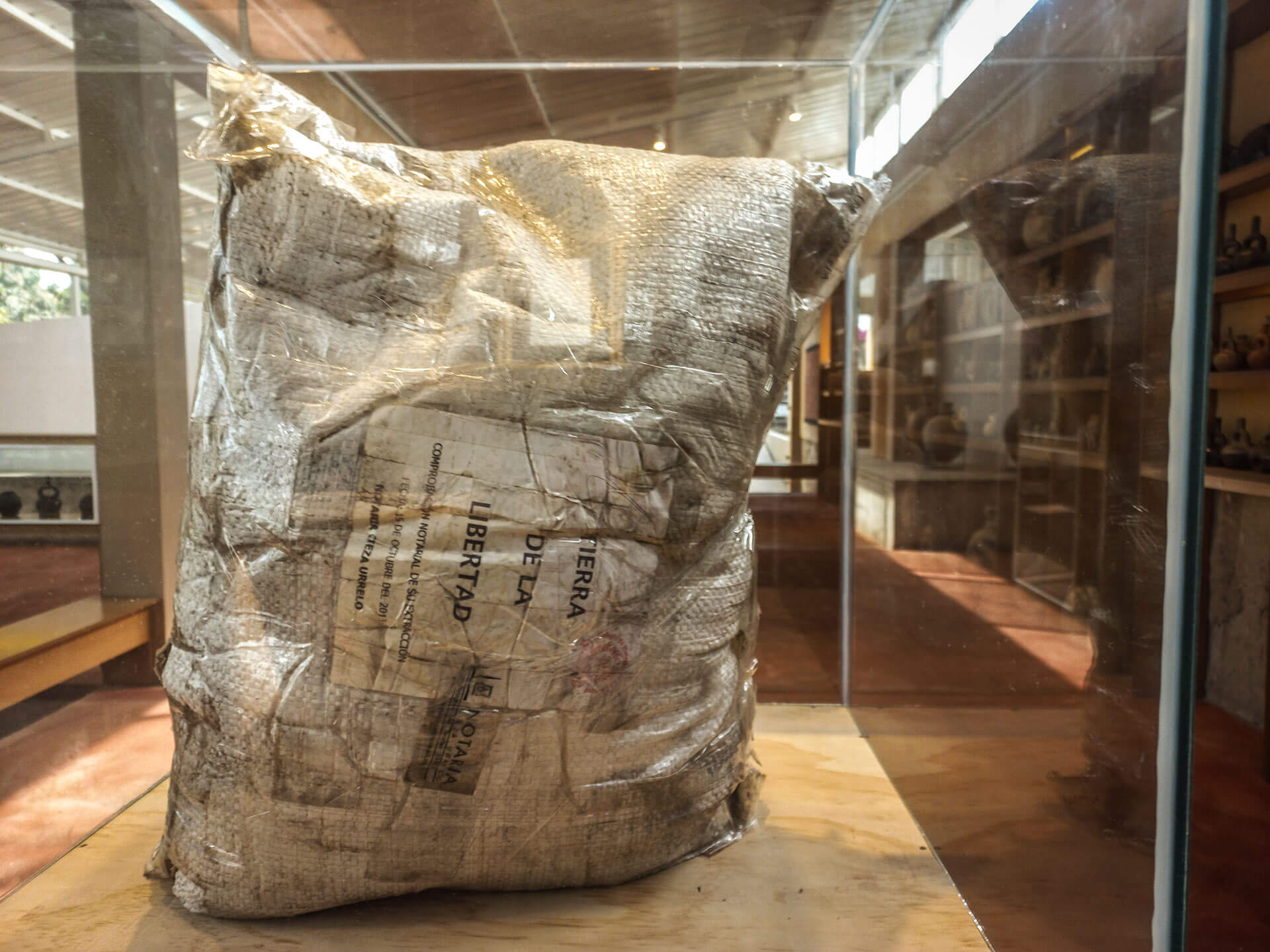
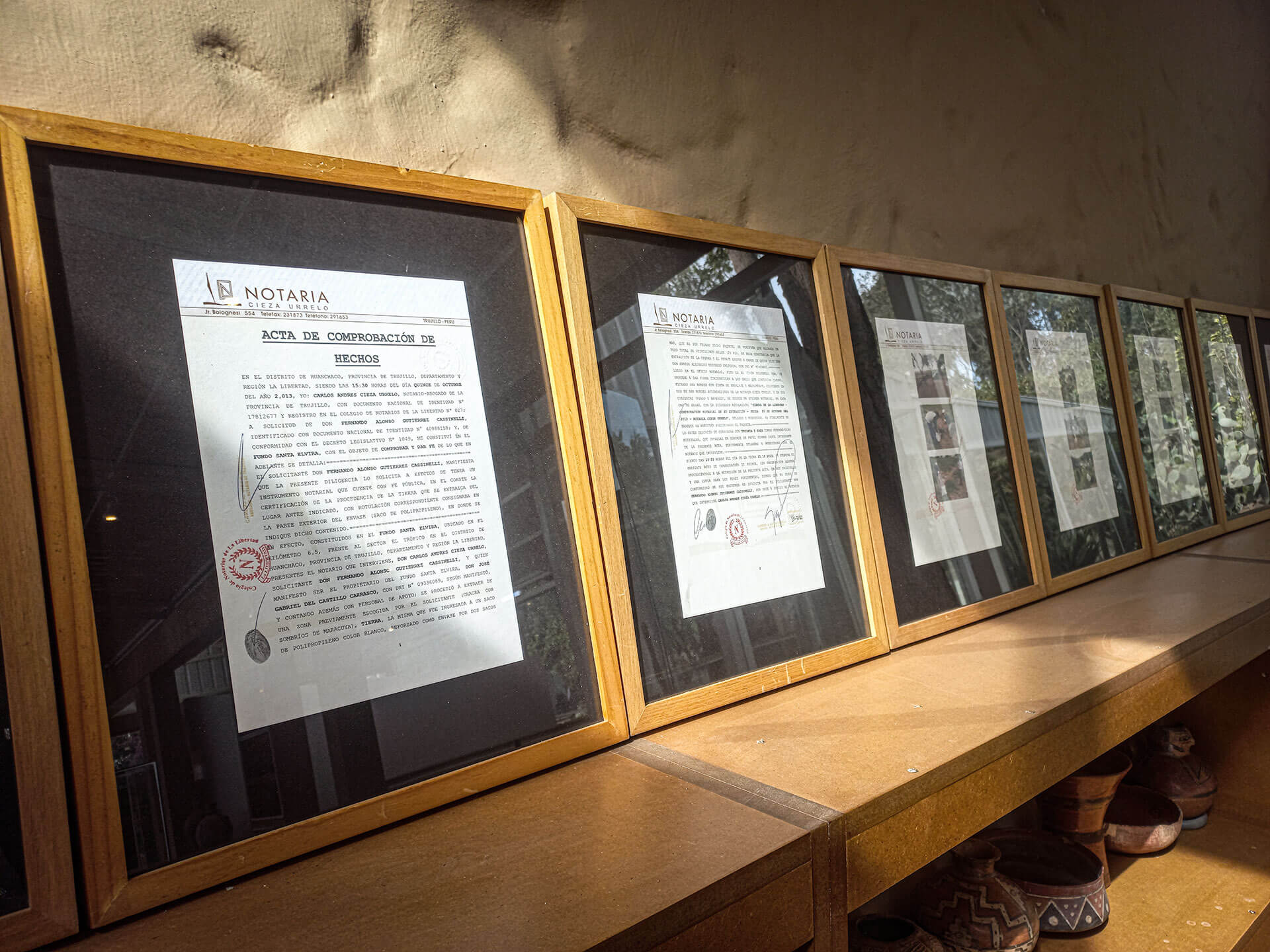

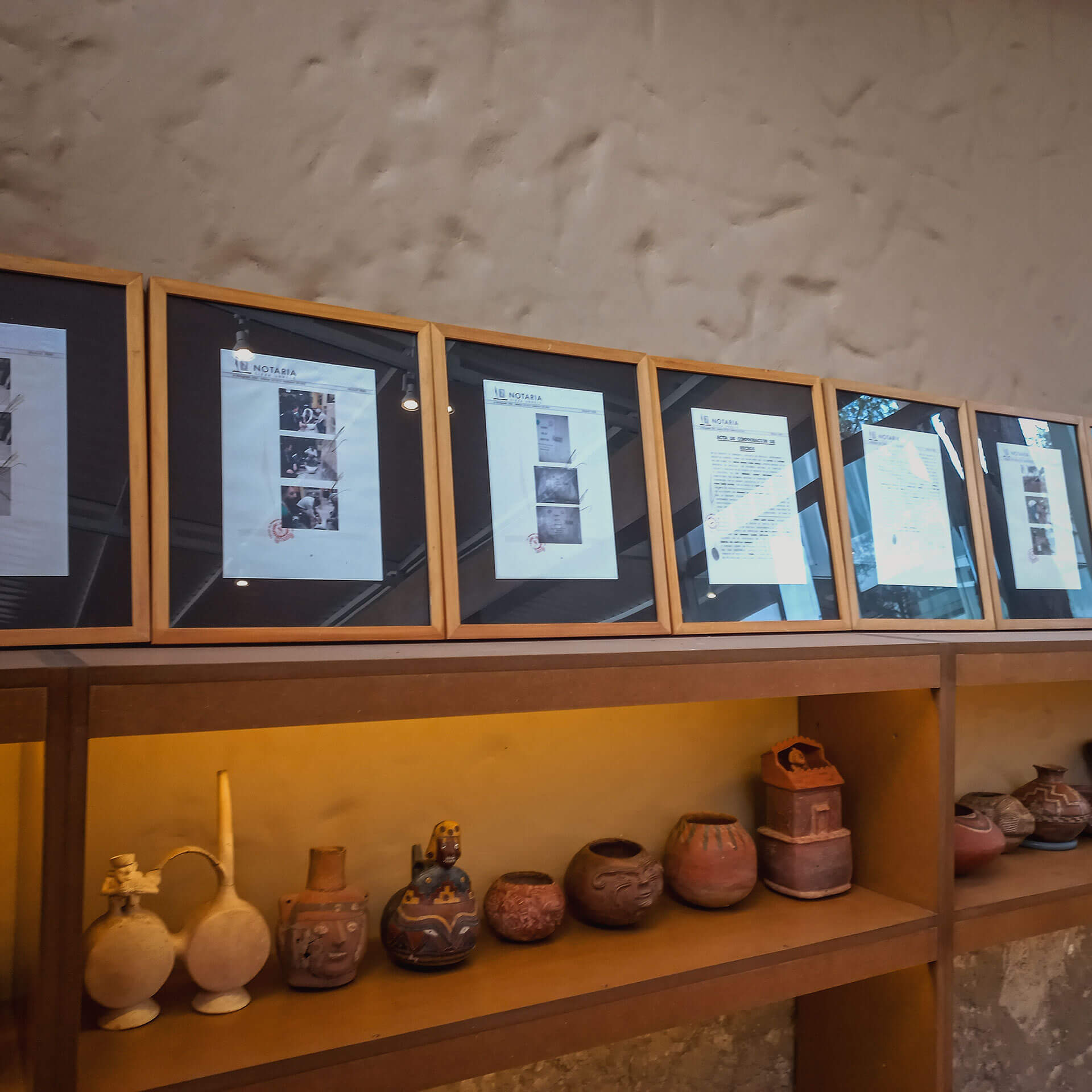
Hace más de diez años traje a la capital (Lima) un saco de “Tierra de la Libertad”, acompañado de los documentos notariales correspondientes que certificaron, a nombre de la Nación, que aquella tierra llevaba oficialmente ese nombre. Ese juego de palabras contenía una poética de esperanza, de promesa y de futuro, en un momento en que comenzaban a celebrarse los bicentenarios de la independencia latinoamericana y a imaginar nuevamente el porvenir.
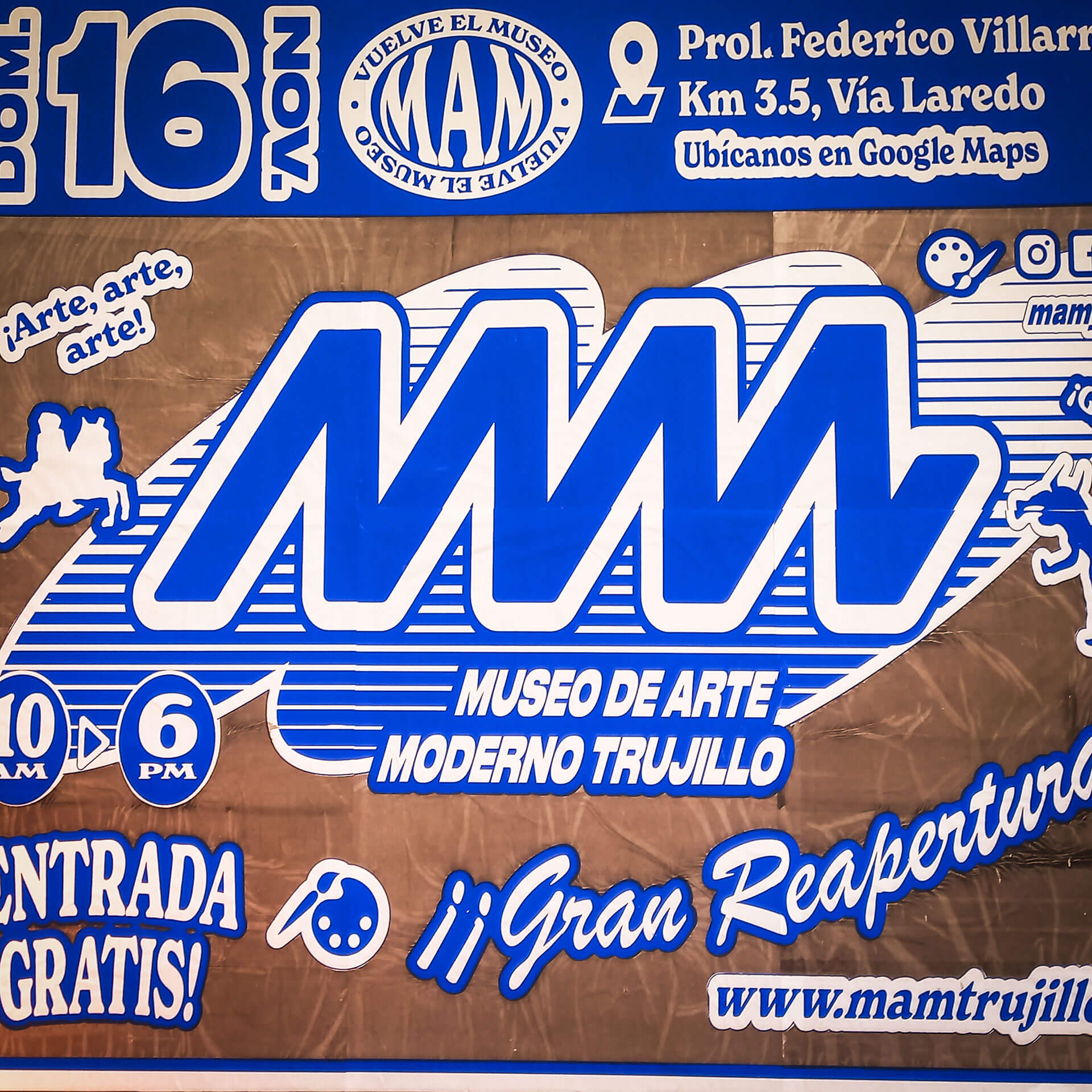
Más de una década después, esa “tierra de la libertad” se ha transformado en un territorio mucho más complejo y violento de lo que podríamos haber imaginado. Hoy, las mafias, el sicariato, las extorsiones y la muerte parecen definir el territorio, mientras la libertad corre el riesgo de convertirse en una contradicción. Sin embargo, en un acto de fe, de esperanza y de voluntad de futuro, el Museo de Arte Moderno de Trujillo vuelve a abrir sus puertas. Lo hace como un gesto que nos atraviesa y nos señala un camino necesario y posible.
La obra, instalada en el área prehispánica del museo, establece diálogos aún más profundos: se conecta con la tierra, con lo que hay debajo de ella, con aquello que fue extraído, llevado y que ahora necesita regresar, del mismo modo que este saco y sus certificados.
Fotos: © Huanchaco.
More than ten years ago, I brought to the capital (Lima) a sack of “Tierra de la Libertad¹” accompanied by the corresponding notarized documents certifying, in the name of the nation, that this soil officially carried that name. The play on words held a poetics of hope, promise, and future, at a time when Latin American independence bicentennials were beginning to be celebrated and we were invited to look ahead.
More than a decade later, that “Tierra de La Libertad” has become a far more complex and violent territory than we could have imagined. Mafias, contract killings, extortion, and death currently define the territory, and freedom risks becoming a contradiction. Yet, as an act of faith, hope, and will toward the future, the Museum of Modern Art of Trujillo opens its doors once again. It does so as an action that pierces through us and reveals a necessary and possible path.
The work installed in the museum’s pre-Hispanic area creates far more intricate dialogues, connecting it to the earth—what lies beneath it, what has been extracted, taken away, and must return—just like this sack and its certificates.
1 Tierra de La Libertad can be literally translated as Soil of Liberty. It is a wordplay that connects the name of the region in northern Peru called La Libertad (Liberty) with the idea of “soil” as promise and future. It is also the place where I was born. The soil was collected in Huanchaco, in La Libertad; and “Huanchaco” is also the nickname I was given in Lima precisely because I came from that place.
Photos: © Huanchaco.